
Addison City Directory Shelves
Addison's city directory sources are spread among several institutions. The free 1925-26 DuPage County Directory is the best online starting point. Addison Public Library adds news, school, census, and database tools. Addison Historical Museum holds the most local mix, including family files and telephone directories. Wheaton Public Library fills later address-based gaps with county directories and Haines reverse volumes.
| Collection | Years or format | Where held | Access |
|---|---|---|---|
| DuPage County Directory | 1925-26, McDonough & Co. | Illinois Digital Archives | Free online, 1,188 pages |
| Earlier county runs | 1915/16 and 1924-28 cataloged | Gale catalog and Wheaton | Confirm physical or film access |
| Haines Criss-Cross | 1988-2021; Near West Suburban 2004-2021 | Wheaton Public Library | In-library, confirm Addison coverage |
| Telephone books | Suburban film 1920-1971; Wheaton print 1951-2016 | Wheaton and Addison Museum | Reference desk or appointment |
| Addison Press | Library describes online 1989-2000 | Addison Public Library | Search or browse with help |
| Yearbooks | Addison Trail and Driscoll | Addison Public Library | In-house |
No authority identified one first or last printed Addison city directory year. Confirm an exact volume before travel, especially for a reverse directory.
Search Addison's Scanned Directory
The digitized 1925-26 DuPage County Directory puts Addison on printed pages 17 through 25. A text search can also find county classified pages, so a hit is not always in the local alphabetical run. Save both the printed page and digital object number.
OCR can mistake initials, punctuation, and short street forms. Compare its text with the image. The full volume gives context that a clipped result cannot supply.
The linked capture shows the page sequence and viewer.
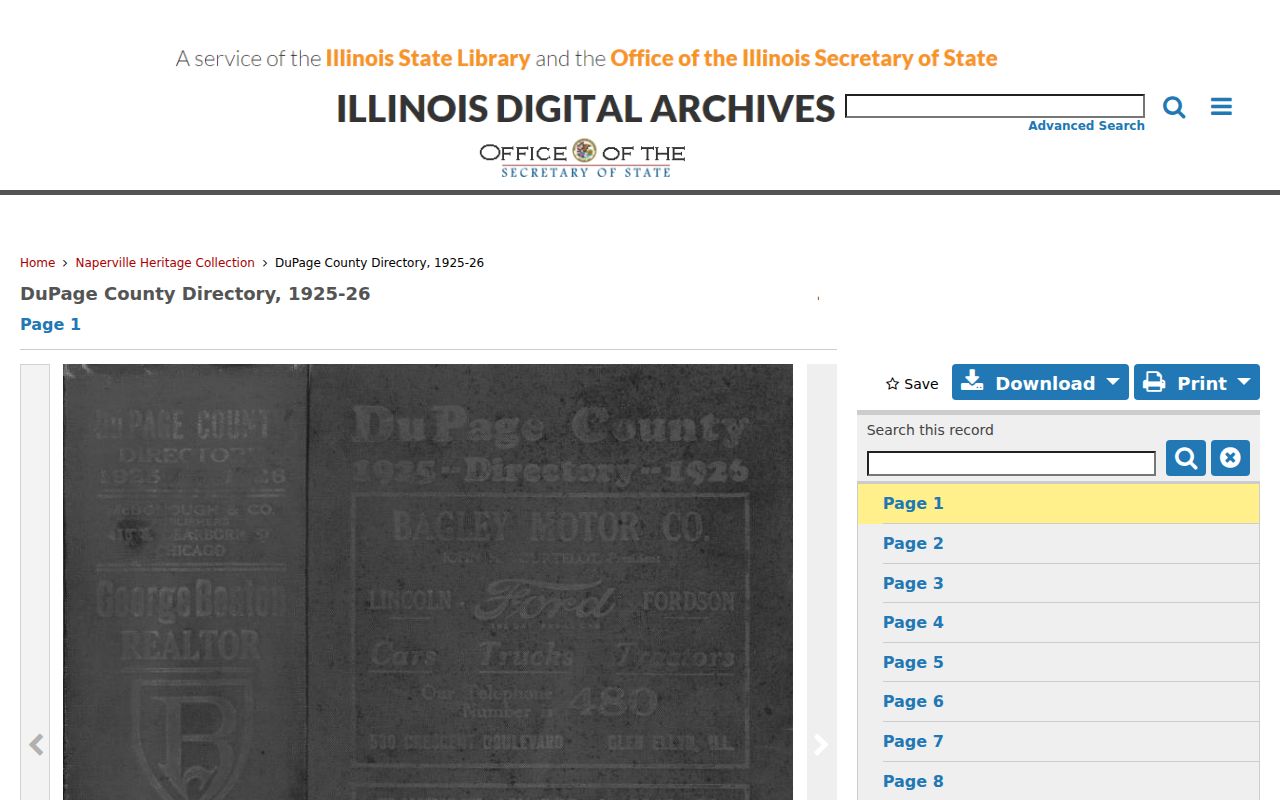
Keep each Addison entry tied to its printed section.
Read an Addison Directory Entry
The sample Addison page is headed ADDISON and prints a historical population of 562. It mixes personal and service entries. Each line is a lead, not proof of modern residence.
| Printed name | Surname plus given name or initial, sometimes a family link |
|---|---|
| Location | Street or rural clue, often Lake Street on the sample |
| Residence mark | A short mark such as “r,” checked in the key |
| Telephone | A number when the publisher listed one |
| Page context | Printed page and object ID separate local from classified hits |
- Criss-cross directory
- A later directory arranged by street or address, then by name.
- Householder index
- An index focused on the named person linked to a household.
- Abbreviation key
- The publisher's legend for short forms and marks.
This capture preserves the layout that OCR flattens.
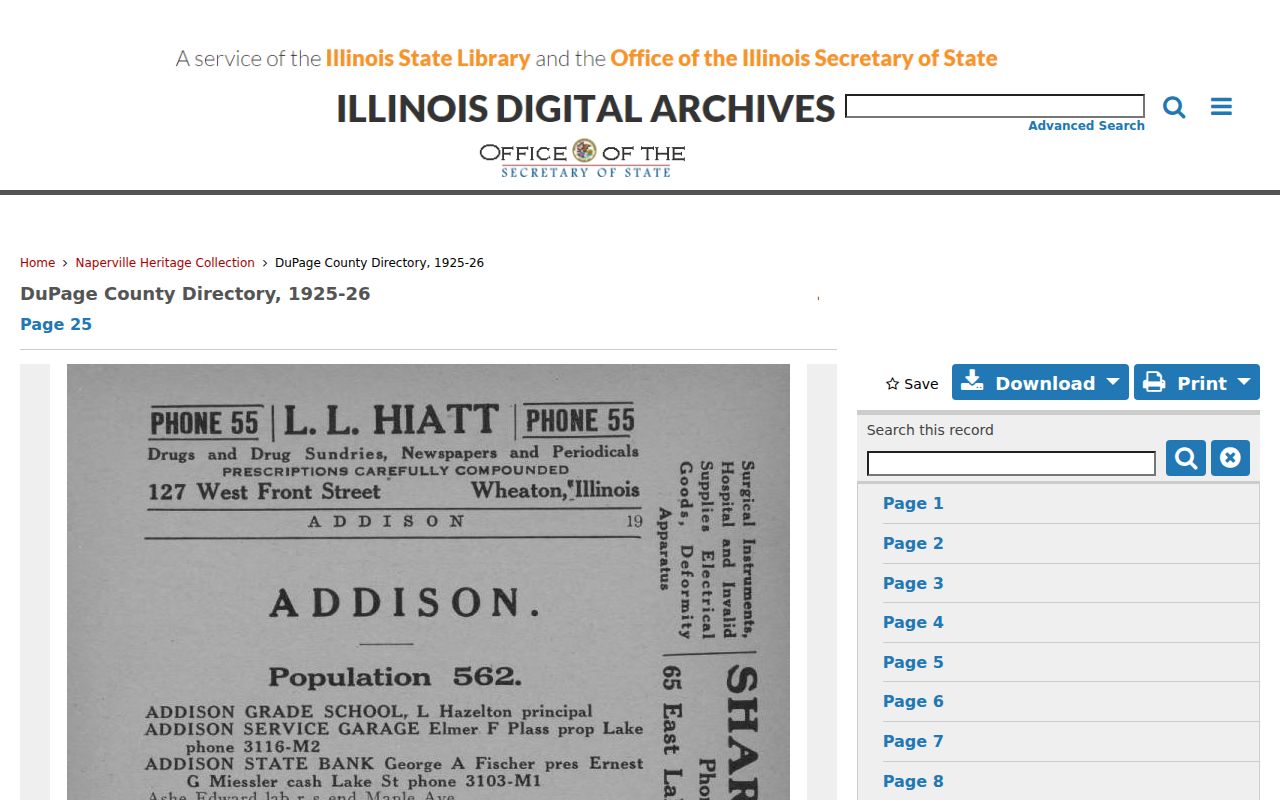
The image separates initials, marks, phones, and nearby entries.
Names Behind Addison's 562
The 1925-26 Addison section preserves Balzer, Fischer, Overkamp, and Krage surname leads. They are search terms, not a list of people in Addison now. A spelling from the scan can open a family file, obituary search, or census check.
The publisher's population line also shows why classified results need care. Keep the town heading and nearby lines in each citation.
Addison Library Directory Tools
Addison Public Library local history offers Ancestry Library Edition in the building, plus Fold3, HeritageQuest, newspapers, Addison Press, and local yearbooks. Adult Services can arrange help at 630-458-3320. The library is at 4 Friendship Plaza.
A card may unlock licensed tools, while some sources require a visit. Staff can test a surname variant, find a newspaper date, or identify a book that bridges a missing year.
The research page shows this mix of sources.
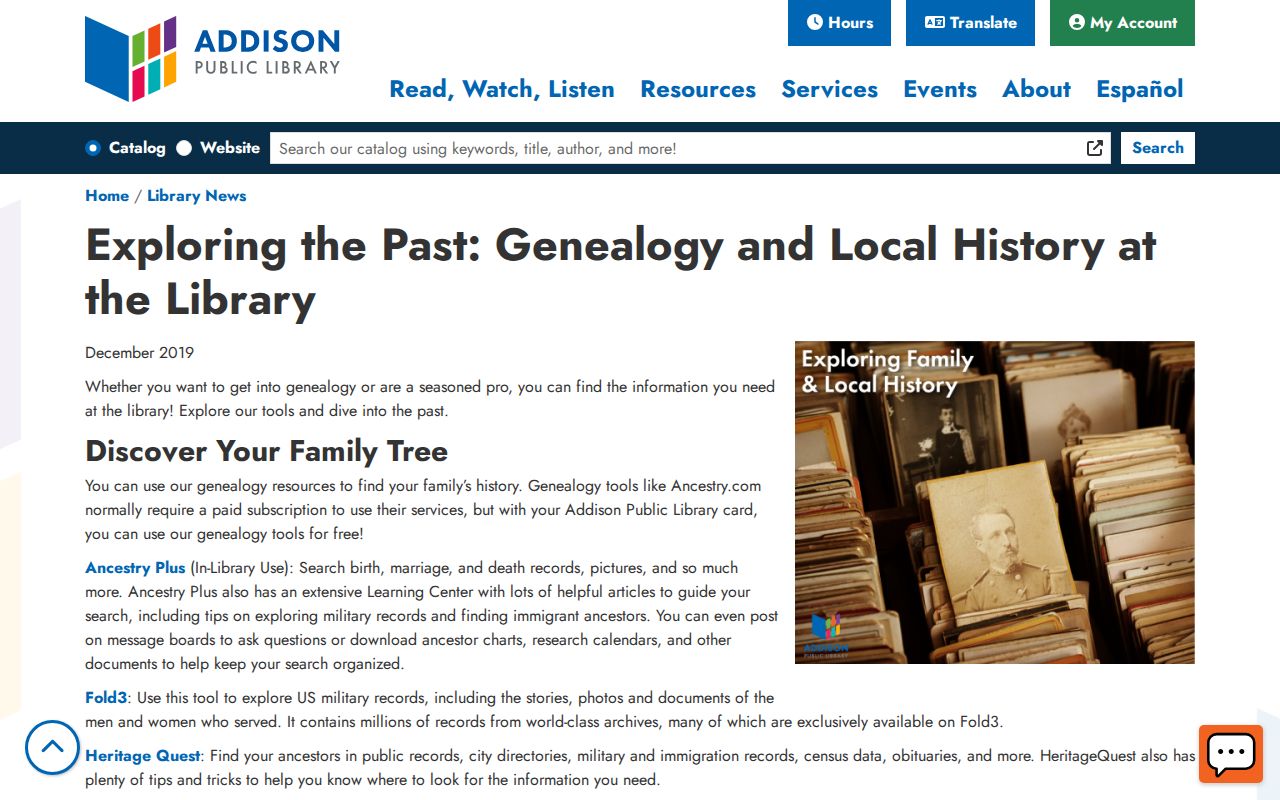
These tools work best after a city directory gives a name, date, and place.
Addison Museum Family Files
The Addison Historical Museum archive has photographs, maps, blueprints, local books, city telephone directories, family files, and clippings. Research is by appointment at 630-628-1433 or museum@addison-il.org.
The historic-resources view is the doorway to those holdings.
Museum material can add building and family context to a one-line entry.
The museum campus page gives the setting for the Balzer, Coach, and Century houses.
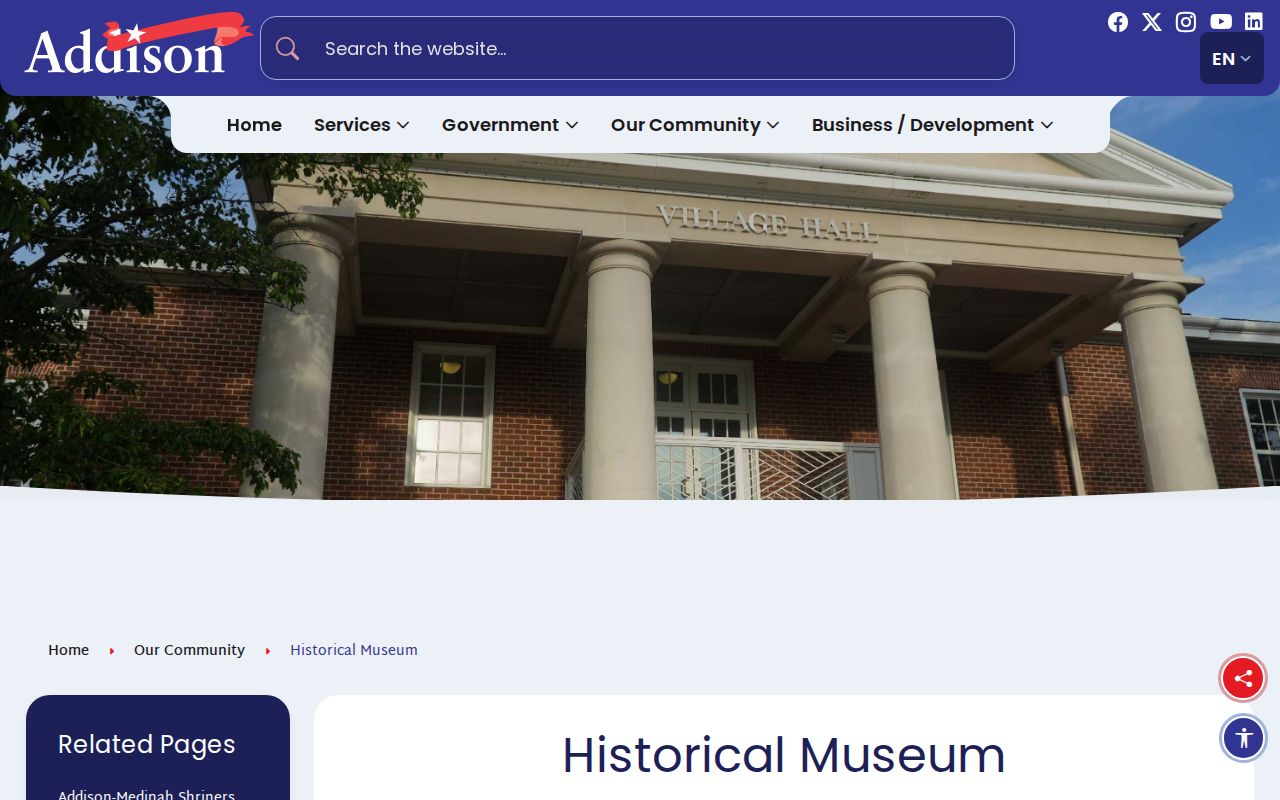
These buildings anchor comparisons among directories, maps, and photos.
Addison Press Extends Directory Leads
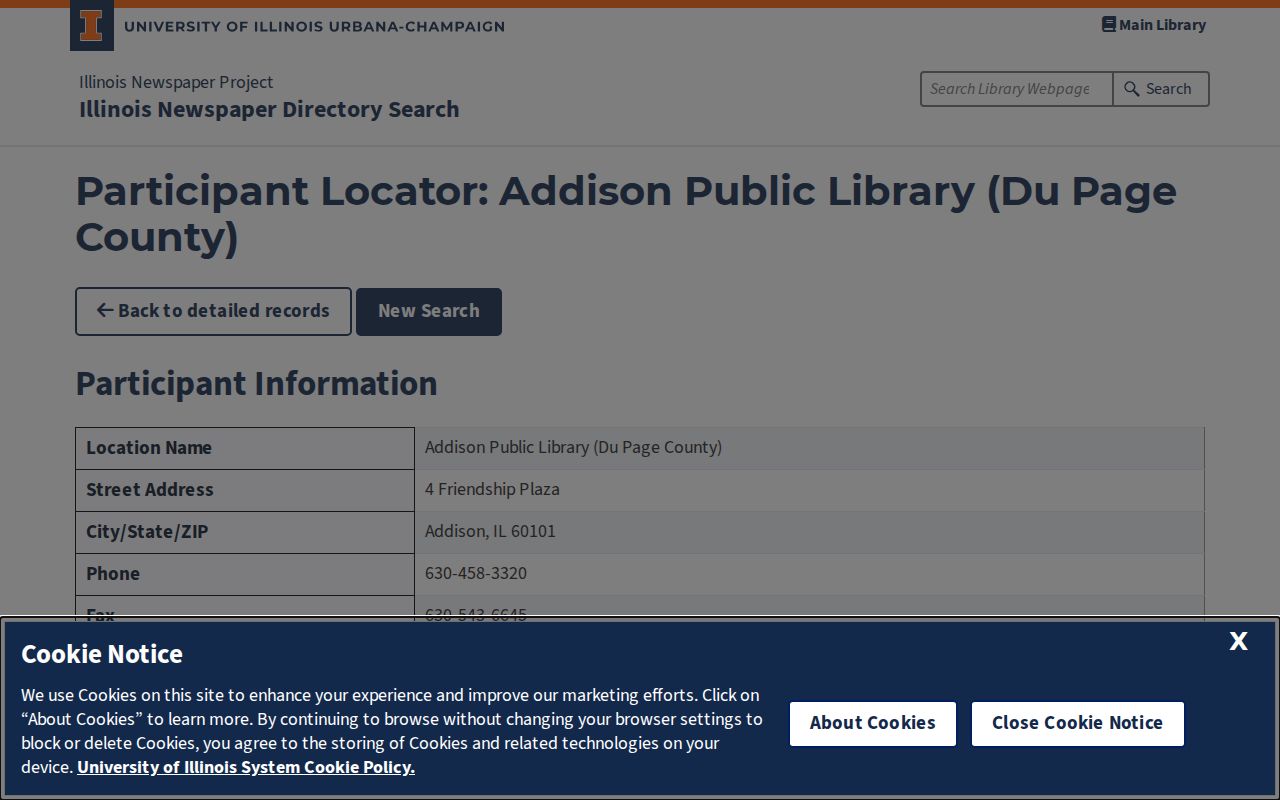
The Illinois Newspaper Project catalogs Addison Press holdings. Its placeholder dates are not a literal complete run. Addison Public Library separately describes online coverage from 1989 through 2000.
The statewide record establishes the holding, while staff can clarify dates.
News and obituary items can distinguish same-name directory residents.
Trace Addison Households by Year
Build the trail one source at a time. Each answers a different question.
- Search the scan by surname, street, or business. Save spelling, page, object ID, and full entry.
- Check Wheaton's Haines runs for address-to-name continuity and confirm Addison coverage.
- Search Addison Press, yearbooks, obituaries, and Museum clippings for dates and family links.
- Pair the lead with a legally open census year from Wheaton's DuPage film.
- For a parcel, use its PIN and deed chain to test owner, household, or business status.
A disappearance may mean a move, death, unlisted household, or missed publication. For present address work, use the Addison street directory.
Addison Records Shelf Timeline
The dates explain why access shifts from archives to digital tools.
| 1839 | DuPage County begins. |
|---|---|
| 1884 | Addison incorporates. |
| 1925-26 | McDonough prints the digitized county volume. |
| 1962 | Addison Public Library opens. |
| 1988-2021 | Wheaton's Haines run supports address-first research. |
No source established a full first-to-last Addison printed run.
Wheaton Expands Addison Directories
Wheaton Public Library local history is the county-level backup when Addison lacks a needed year. Its genealogy center includes DuPage histories, cemetery indexes, phone-book runs, census film, periodicals, and genealogy databases. The 1924-25 county directory can test a lead near the scanned volume. Later Haines material lets a researcher begin with an address.
Call before a trip. Broad shelf runs do not prove complete Addison coverage in each volume. Ask staff to check title, year, format, and access. Wheaton also holds federal census print material for 1840-1870 and several DuPage film years, including 1860-1880, 1910, and 1930. Those pages add family context, subject to the federal 72-year release rule.
Addison City Directory Fallbacks
When an online search stops, follow the collection to its keeper. Addison Library helps with databases and newspapers. The Museum checks family files and phone books by appointment. Wheaton inspects county and reverse directories. IRAD at Northern Illinois University holds DuPage naturalization and local-government series.
The Illinois State Library adds county histories, atlases, and maps, but does not promise personal research. Send a narrow request with surname variants, date range, town, and sources checked. Staff can then identify a likely volume.
Addison Archives Beyond Directories
IRAD is the archive fallback when a printed directory leaves a long gap. Its DuPage holdings include naturalization declarations, dockets, petitions, order books, soldiers' records, and repatriation files, with coverage that varies by series. These records do not replace a city directory. They can confirm a legal name, court event, or county connection when the person vanishes from a yearly listing.
Maps can resolve a place problem. The Illinois State Library and University of Illinois hold atlases, plats, and Sanborn fire-insurance material, although research did not confirm a specific Addison Sanborn sheet or year. Ask by street and cross street rather than claiming a map exists. The Museum's local maps and blueprints are the stronger documented Addison appointment source.
A good citation records what the item actually proves. A directory shows what its publisher printed. A newspaper gives reported context. A census shows the released household on its enumeration date. A deed identifies parties to a land instrument. Keeping those roles separate prevents one old address line from becoming an unsupported story about a family.