
Addison Neighbors Block Sources
The immediate Addison block crosses several public systems. GIS defines which parcels are actually nearby. The assessor supplies a card for each PIN, which is the county's parcel identification number. Recorder plats explain lots and blocks. CityView dates public permit activity. Voter and community sources add limited civic context without creating a roster of private households.
| Source | What It Shows About a Block | Access |
|---|---|---|
| DuPage GIS Parcel Viewer | Parcel shapes, nearby selection, map layers, buffer, selected-PIN export | Free map and official guide |
| Assessor parcel cards | Owner or billing name, situs and mailing addresses, legal description, districts | Free, one PIN at a time |
| Recorder plats and deeds | Lot/block ties, subdivisions, easements, transfers, recorded parties | Online by cutoff; office fallback |
| Addison CityView | Address aliases, PIN, permit type, status, description, dates | Public address and status pages |
| Voter search | Permitted address, precinct, and district context | Exact search with redactions |
| Local institutions | Public contacts for civic, library, park, fire, school, and church groups | Published institutional contacts |
No official Addison neighborhood-association membership directory was located. That gap matters: a public parcel map can support a block study, but it should not be turned into a private member list.
Map Addison Neighbor Parcels
The reproducible route uses the DuPage GIS Parcel Viewer. Search by the target PIN or street address and click the result so the map zooms to the parcel. Adjoining shapes can be selected by map browse or the Shapes tool. For a consistent radius, use Buffer with 250 as the default distance, Feet as the unit, and Parcel Search Results as the source.
- Search the known Addison address or enter the PIN without dashes.
- Select the correct parcel and compare its shape to streets and lot lines.
- Choose adjoining parcels directly, or run the 250-foot buffer around the result.
- Export the selected PINs, then open each one in DuPage Property Lookup.
- Save a PDF map or report so the geographic relationship remains clear.
Selected parcels appear light blue. The guide allows downloads in TXT, CSV, PDF, XLS, and XLSX formats and describes a maximum of 1,000 selected parcels. Keep the set to the actual block needed. For a full named-street workflow, use the Addison street directory.
Buffer Addison Neighbors Precisely
The GIS buffer is the strongest practical tool for defining “nearby.” It can select from the parcel search result, one feature in a map popup, or all features in that popup. This is more consistent than guessing which homes share a block from a mailing label. Roads, rear lot lines, and irregular subdivisions can make visual assumptions wrong.
The Village also publishes an Addison GIS buildings layer that exposes the municipal building-map service.
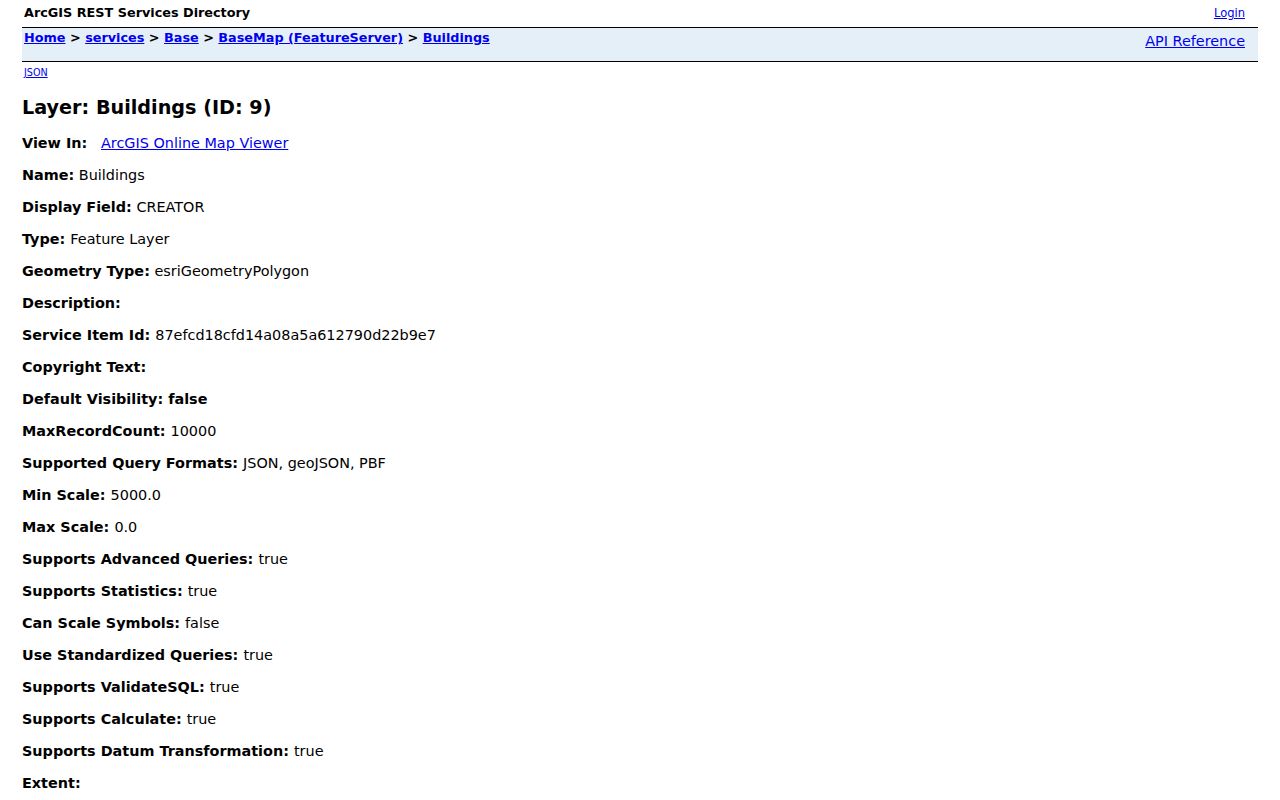
Building outlines add site context, while the county PIN and legal description remain the stronger keys for joining a structure to a property card.
- Parcel
- A legally defined piece of land tracked under one county PIN.
- Buffer
- A measured zone drawn around a selected map feature.
- Situs address
- The address where the parcel or building is located.
- Plat
- A recorded map showing lots, blocks, easements, and subdivision lines.
Compare Addison Parcel Cards
Open each exported PIN in DuPage Property Lookup. Compare the owner or billing name, situs address, mailing address, legal description, tax class, exemptions, and district stack. The mailing field may point to a corporate office, a tax contact, or a place outside Addison. It is not proof that the named owner occupies the site.
The district stack is useful block geography. One card can name county, forest preserve, water commission, airport authority, township, Village, library, park, fire, school, and college districts. East and west Addison addresses may also divide at Rohlwing Road between Addison and Bloomingdale Township contexts. Nearby postal addresses can therefore carry different public-service layers.
Note: Preserve the PIN and legal description when street labels, mailing details, or owner names differ between nearby record systems.
Read Addison Blocks by Plat
A street-facing row of properties is not always one legal block. DuPage Recorder plats can identify subdivision, lot and block, resubdivision, annexation, dedication, vacation, and easement facts. These instruments explain shared drives, odd rear boundaries, and parcels that appear adjacent on a simple street list but belong to different recorded layouts.
Use the GIS export to collect PINs, then search the DuPage Recorder index by PIN, address, owner name, or a known document number. Online name and images begin in 1961, PIN search in 1985, and address search in 1995. Plats can reach the 1800s. Public terminals and Recorder staff in Wheaton are the fallback when the web index or its cutoffs do not reach the needed instrument.
A deed names parties to a transfer, not every person living on the property. Read the plat first for the shape of the block, then use a deed only for the recorded transaction it documents.
Addison Neighbor Permit Activity
The Village CityView portal adds address-keyed municipal activity. Its permit locator uses an address or application number. A property review can show address history, PIN, a privacy-limited historic owner display, and linked permits. A permit status page may identify application type, description, application, issue, expiration and final dates, and status. These dates can explain visible work without identifying a household.
The Addison permit locator is the public starting screen.
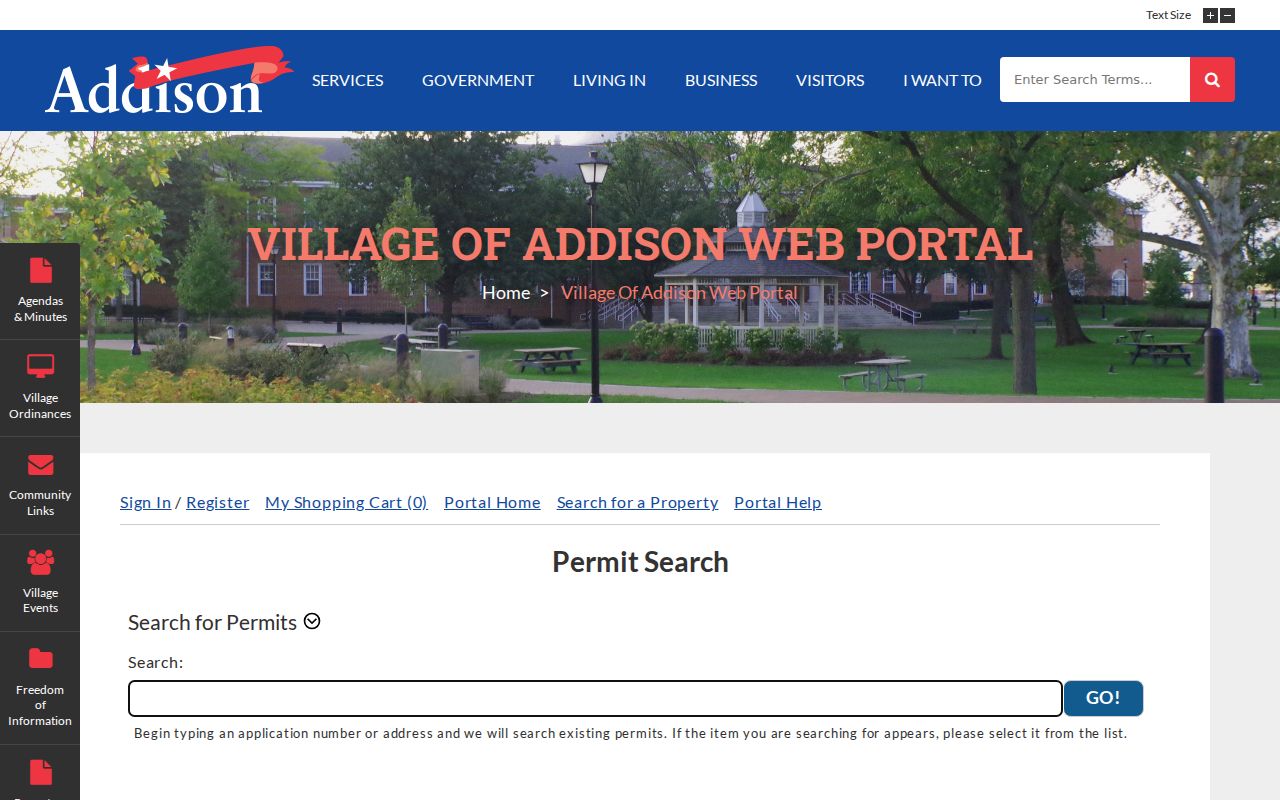
Search one exact address at a time and record the application number before opening the detail view.
An official sample finaled permit record shows the fields CityView can return.
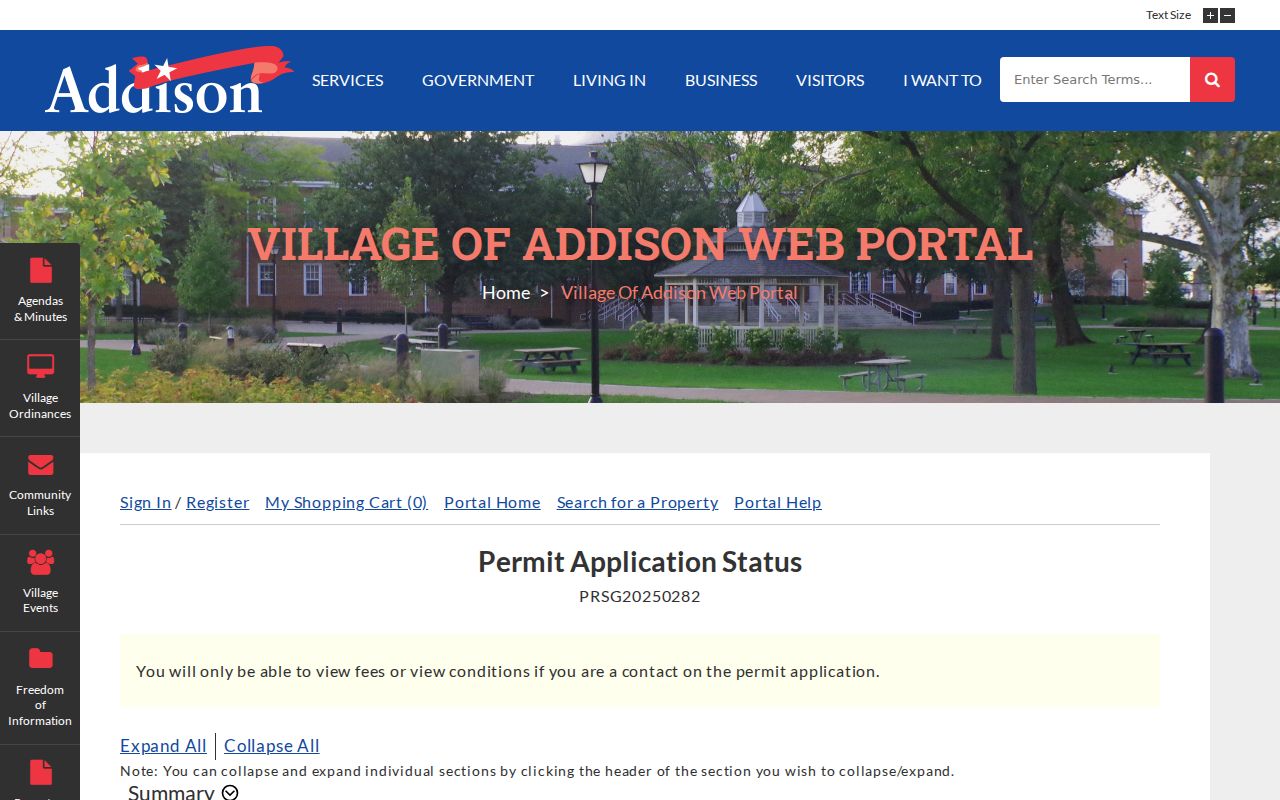
The sample demonstrates public permit chronology. It does not establish who occupied that address on any date.
Addison Voter Block Boundaries
The DuPage voter search can use a specific address and can return precinct or district context allowed by the official form. Illinois Election Code access does not create a full nearby-household display. Public list rules redact the street number of a home address, phone, Social Security number, most birth-date data, portions of email, and protected-person details.
A voter match shows a registration fact. It does not show ballot choices, every adult at an address, every owner, or every resident. Use it only for a lawful exact search, and rely on the parcel map for the shape of the block. Where an address is protected, do not try to rebuild it from another source.
Block limit. Precinct and district context can describe Addison civic geography without publishing a list of private people nearby.
Addison Community Contact Layer
The public community layer consists of institutions, not household rosters. The Addison Township community-links page points to Village and Township services, Addison Public Library, the food pantry, civic services, and government contacts. An organization can decide whether to pass along a message without disclosing private membership.
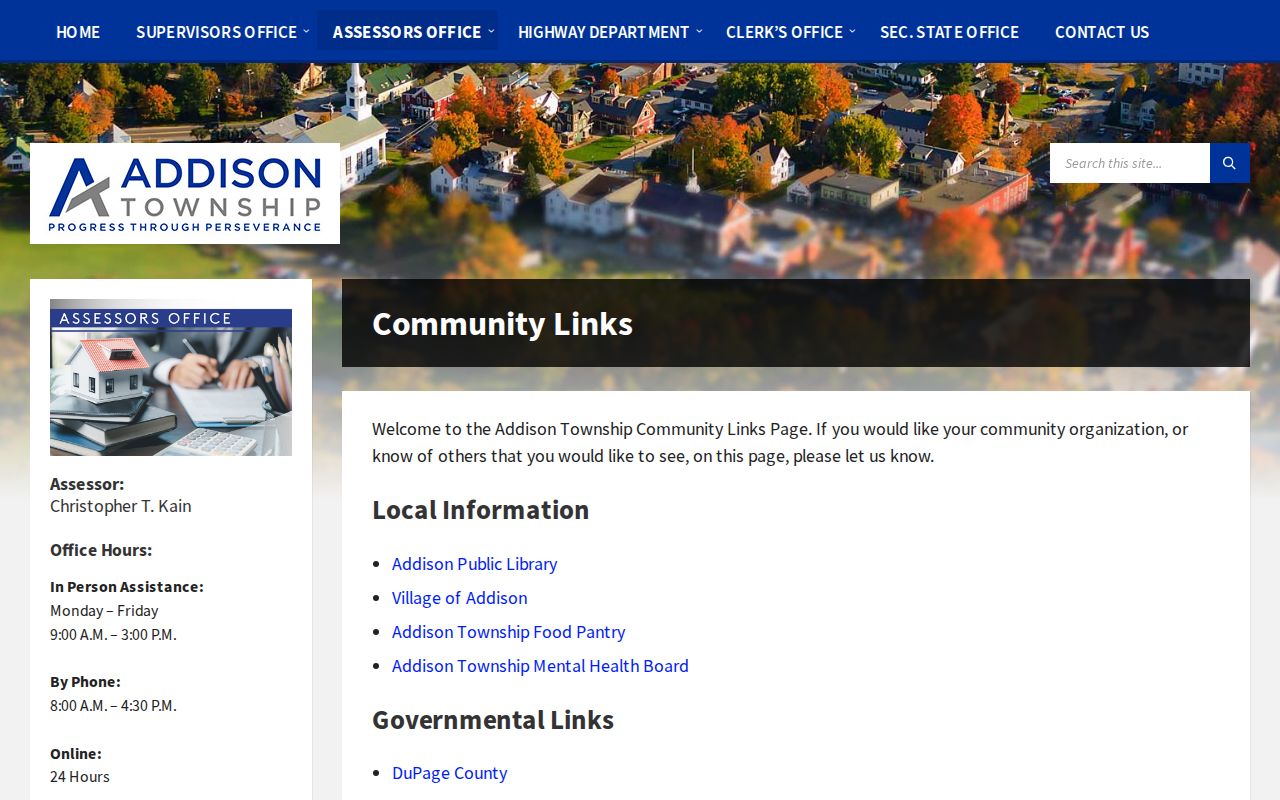
The umbrella page helps locate a responsible public contact while keeping the line between an institution and its private participants clear.
| Public Contact | Appropriate Block Use |
|---|---|
| Addison Township links | Find public service and civic organizations |
| Village telephone directory | Reach library, parks, fire, schools, churches, post office, and county offices |
| Addison Public Library | Ask about local history, newspapers, and reference sources |
| Addison Historical Museum | Request an appointment for maps, phone books, photos, or family files |
No official Village HOA names, boundaries, membership directories, or joining instructions were found. A public contact is not evidence that a person belongs to a group.
Addison Business Contacts Differ
The Addison Chamber publishes member-business contacts. It is not a directory of Addison neighbors, a residential association, or a block roster. A business address may still help identify the public office or service operating near the target parcel, as long as the result is not used to infer where an owner or worker lives.
The Addison Chamber directory shows the public business-contact layer.
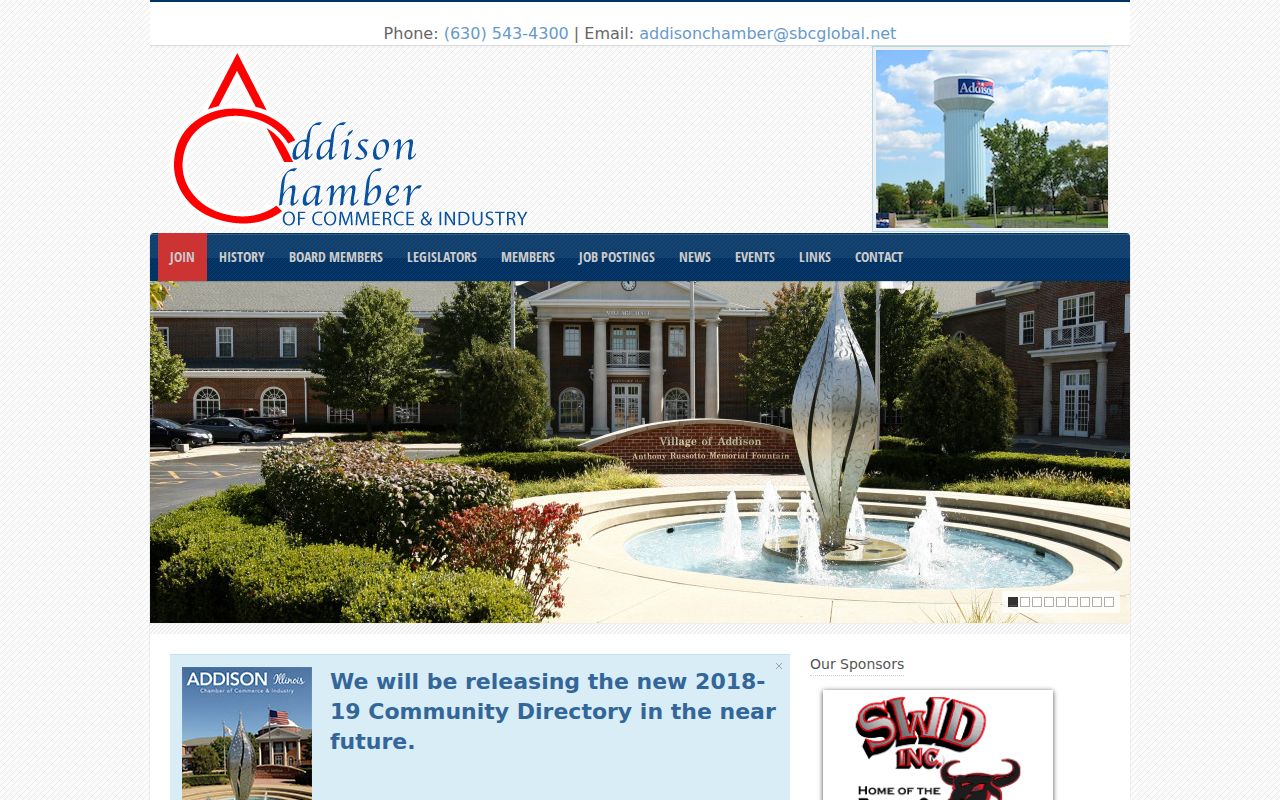
Keep business listings separate from assessor ownership, voter registration, and historical household entries.
| Official Block Records | Commercial Neighbor Tools |
|---|---|
| Named custodian and defined record purpose | Merge public and licensed data from many dates |
| PIN, document number, or application number can be checked | Identity links may lack a stable source key |
| Corrections go to the office that made the record | Opt-out does not correct the source record |
Trace Former Addison Neighbors
Historical neighbors require a dated source. Wheaton Public Library holds Haines Criss-Cross volumes for 1988 through 2021, subject to confirming the exact Addison coverage in a volume. Addison Historical Museum holds telephone directories, maps, photographs, family files, and clippings by appointment. These snapshots can place a name beside an address in one year, but they do not prove title or current occupancy.
Pair a reverse-directory entry with a deed, census year, newspaper, or permit date. Preserve both Lake Street and US Route 20 labels when working along that corridor. Old and modern street forms may point to the same setting, while the PIN and legal description provide firmer continuity.
Historical block work belongs to family and neighborhood history. Do not merge old names into a claim about who lives at the address today.
Privacy for Addison Neighbors
Several lawful limits shape an Addison neighbor lookup. The Attorney General's Address Confidentiality Program can provide eligible survivors a substitute mailing address and mail forwarding. Voter records carry statutory redactions. Courts, vital records, and motor-vehicle data have their own exclusions. A commercial opt-out cannot erase a deed, parcel card, permit, directory scan, or archive.
When an official record is wrong, contact its custodian with the PIN, application number, document number, or case number. Never infer private group membership from a church, civic contact, chamber listing, or nearby address. The safe product of block research is a map and a set of sourced public facts, not a dossier on private people.
Lawful use. Use Addison neighbors records for personal and civic research. Never stalk, harass, threaten, impersonate, or expose a protected person.